Hurricane Katrina: Conspiracy Theories and More
Introduction
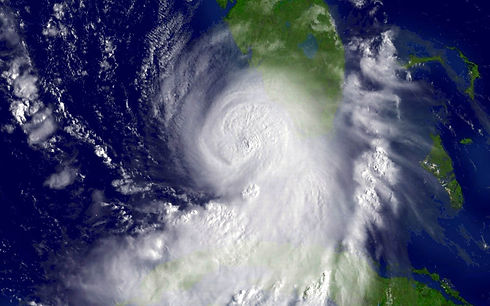
Was Hurricane Katrina an orchestrated catastrophe, a natural disaster turned humanitarian crisis through the American Government's idle hands? Thousands of people were left stranded in their homes, unable to gain access to food or water for weeks (Plyer). Many of these victims never ate or drank anything ever again, as Katrina is speculated to have taken over 1,833 lives (The Editors of Encyclopedia Britannica, “Hurricane Katrina | Damage, Deaths, Aftermath, & Facts”). Needless to say, the American government was poorly equipped for the situation. According to the Cato Institute, an independent public policy research organization, “the government was unprepared for Katrina even though it was widely known that the hurricane was probable” (Edwards). The three most speculated conspiracy theories concerning the hurricane include:
-
Weather seeding
-
Broken levees
-
Delayed aid
Let us delve into the world of Hurricane Katrina conspiracy theories and examine how much evidence truly supports them.

Character Analysis
Counter Arguments for each Theory

1
Weather Seeding
The first theory suggests that the government manufactured a category three hurricane through artificial and unnatural means. In the 1960s, the U.S. government established Project STORMFURY in an effort to develop methods for weather manipulation, with a primary focus on mitigating hazardous events such as hurricanes and tornadoes (“Project STORMFURY”). The project was discontinued in the 1980s due to a lack of findings and progress (Senesac). Therefore, it would be impossible for Hurricane Katrina to have been purposefully orchestrated by the U.S. government due to a lack of resources and ability.
2
Broken Levees
The second states that the New Orleans levees, the only structures keeping stormwater at bay, were purposefully bombed. Eyewitness reports of survivors hearing loud crashing sounds as the levees busted exist, but there is significantly more evidence that shows that the levees were simply extremely outdated and in need of upgrades (Evans). The levee failures were studied, and a preliminary report was issued. “We didn’t find any evidence that would indicate explosions,” says Prof. Robert Bea, from the University of California, Berkeley (“One Engineer’s Effort to Tame a Dangerous World - Berkeley Engineering”). According to the United States Army Corps of Engineers (USACE), "The levees were only designed to protect New Orleans from a Category Three storm, and the storm surge generated by Hurricane Katrina was simply too massive for the levees to handle, which caused the levees to break" (“Hurricane Katrina after Twenty Years”). Eric Halpin, Ph.D, says “The levees were “a system in name only”, as they were not planned, designed, or constructed to be operated or perform as integrated elements (“New Orleans Levee System (Louisiana, 2005) | Case Study | ASDSO Lessons Learned”). The theory that the levees were bombed has been disproved under investigation by engineers and scholars.
3
Delayed Humanitarian Aid
The third considers the possibility that essential items, such as food and humanitarian aid, were purposefully withheld from stranded survivors. According to the Southern Poverty Law Center (SPLC), "Following the storm, there was a delay in response time — shortages in food, water, and other lifesaving supplies grew as response efforts had to be coordinated and officials had to choose what and who to prioritize with limited resources" (Thompson). The U.S was offered over $845 million in cash and oil by foreign aid (“U.S. Didn’t Accept Most Foreign Katrina Aid”) and had 77 offers from different countries, yet 54 out of 77 offers were blatantly declined, and only $40 million was used for Katrina aftermath within two years (Baker-Smith). Around 50,000 people sought refuge over the span of three days in the Superdome, supplies ran dangerously low and there was no power or clean water to be found (Ferrell). The government's late response and unpreparedness for Katrina gives substance to the idea that aid was willfully withheld.
Conclusion
Conclusion
After research and review on Hurricane Katrina conspiracies, the first two conspiracies relating to weather seeding and broken levees are unfounded and cannot be proved. Unlike the delayed aid theory, there is no substantial evidence. There are, however, many signs that point to the idea that aid was hindered purposefully by the government through numerous journalistic reports and federal evidence.
